
AI Contract Review Software: Complete Buyer's Guide
Introduction
Legal departments often face an overwhelming volume of contracts, averaging thousands each year. Manual reviews consume 50-60% of attorney time, focusing on tasks not requiring advanced judgment. AI contract review software is set to transform this process by using natural language processing, machine learning, and transformer models to automate analysis, reducing the need for extensive attorney review. Understanding these systems is crucial, as not all platforms are equal. Technical differences impact accuracy and speed. This guide explains system functions, highlights key capabilities, and offers insights into evaluating platforms by technical merit over marketing claims.
How AI Contract Review Software Works
Modern contract review AI tools rely on various technologies working together. Understanding these components helps evaluate vendor claims. Natural language processing (NLP) breaks contracts into components, identifying clauses and mapping relationships. Advanced NLP models understand that terms like “Force Majeure” may have similar meanings, despite different wording.
AI Contract Review Core Technologies:
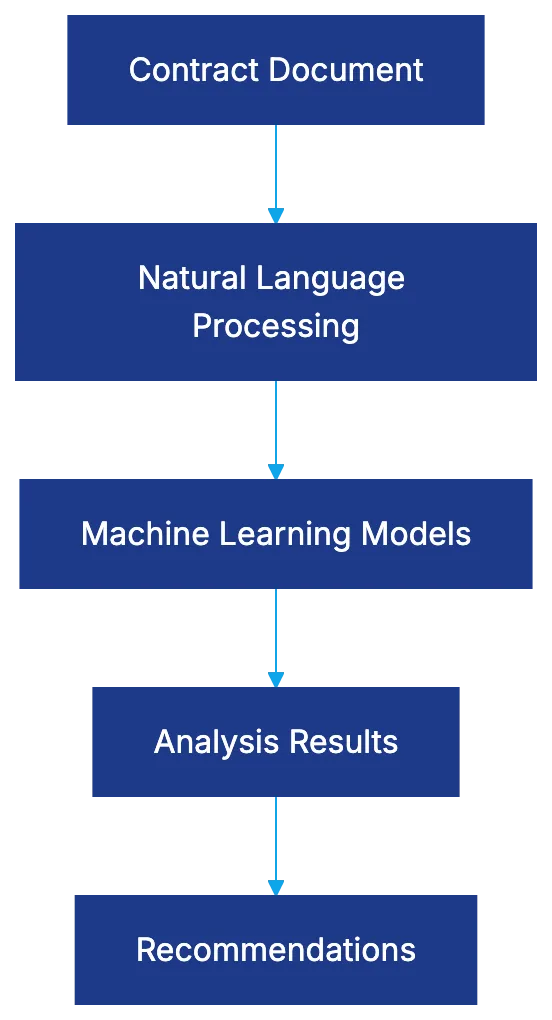
Machine learning (ML) is trained on lawyer-labeled examples. Lawyers annotate contracts for problematic clauses and acceptable language. Training quality and quantity affect accuracy. Transformer models like BERT handle question-answering tasks, determining pertinent sections for inquiries. Retrieval-augmented generation (RAG) ensures responses are grounded in actual documents, reducing hallucination risks. RAG can integrate firm-specific playbooks and approved language.
Issue Spotting Capabilities
Automated contract review software quickly identifies problems that might be missed during human review.
- Missing Clauses: The system detects omissions by comparing contracts against a checklist of expected provisions, flagging missing clauses.
- Deviations from Standard Language: Alerts trigger for deviations from approved forms by understanding semantic similarity rather than exact matches.
- Inconsistent Terms: Catches risks from inconsistencies, tracking terms like “Confidential Information” versus “Proprietary Information.”
- Regulatory Issues: Needs specialized training data to flag compliance issues like GDPR and HIPAA gaps.
Playbook Enforcement
Playbook enforcement turns negotiation positions into checking rules, converting tribal knowledge into consistent standards.
Issue Detection Process:

- Rules-based Checking: Contracts checked against playbook positions; e.g., checking for liability caps.
- Fallback Clauses: AI maps contract language to risk tolerance, flagging anything unacceptable.
- Compliance Requirements: Ensures compliance with regulations like California non-compete restrictions.
Automated Redlining
Automated redlining elevates review from analysis to action but faces technical challenges.
- Word-by-Word Revisions: Requires understanding and correcting errors beyond pattern matching.
- Technical Approaches: Use of template substitution or transformer models for context-appropriate edits.
Platform Technical Differentiators
Legal AI platforms are distinguished by technical architecture.
- Kira Systems: Hybrid AI with machine learning and rules-based approaches.
- Luminance: Emphasis on unsupervised learning for anomalies and outliers.
- Harvey: Cascading architecture for speed and cost-efficiency.
- LegalOn: Attorney-trained models integrated into workflows.
- Spellbook: GPT-4 training with Microsoft Word integration.
Pricing Overview
Contract management AI pricing varies based on model, user count, and features.
- Per-user Subscription Models: $200-$800 per user monthly or annually.
- Per-contract Pricing: $5-$50 per contract, for variable volume.
- Enterprise Licensing: Unlimited usage for a fixed annual fee.
- Setup and Training Fees: $10,000 to $100,000, separate from licenses.
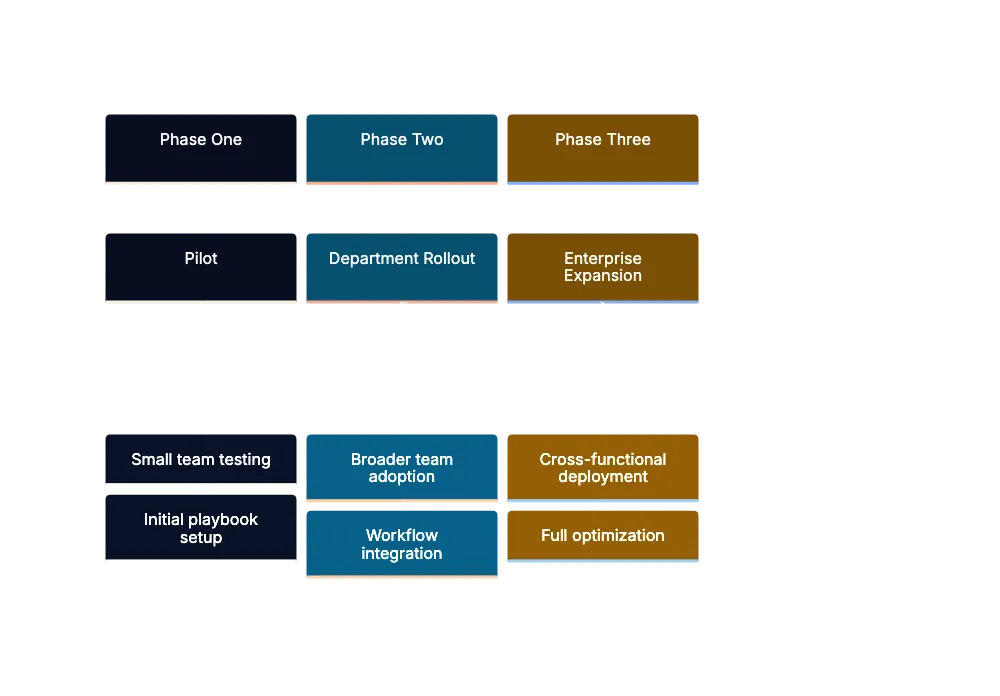
Implementation Timeline:
Security Requirements
Security for contract review AI tools is crucial. Ensure vendors meet SOC 2 Type II requirements. Key criteria include data encryption and access controls.
Implementation Phases
Effective setup involves a phased approach: pilot, departmental rollout, and cross-functional expansion.
- Pilot Phase: 2-3 months with a small team.
- Department Rollout: 3-4 months, expanding on pilot results.
- Cross-functional Expansion: 4-6 months, adding departments and contracts.
Measuring ROI and Success Metrics
Assessing AI contract review software’s impact involves metrics like time savings, accuracy improvements, reduced cycle time, satisfaction, and risk reduction.
Common Implementation Mistakes
Avoid skipping pilot phases, underdeveloping playbooks, and insufficient change management. Ensure integration with workflows and verify AI output.
Conclusion
Thoughtfully implemented AI contract review software offers substantial value, improving extractive and analytical tasks traditionally requiring human effort. Success depends on understanding capabilities, choosing suitable platforms, and phased implementation, promoting continuous improvement. The question isn’t if you’ll use AI for contracts, but how effectively you’ll leverage these tools as competitors advance.
Frequently Asked Questions
How can AI contract review software save time for legal teams?
AI contract review software automates the analysis of contracts, reducing the manual review time that typically consumes 50-60% of an attorney's time. By quickly identifying key clauses and potential issues, these tools allow legal teams to focus on higher-value tasks rather than tedious document reviews.
What should I consider when evaluating different AI contract review platforms?
When evaluating AI contract review platforms, focus on their technical capabilities, such as the sophistication of their natural language processing and machine learning models. Assess how well the system integrates with your existing workflows, and consider user reviews and case studies that demonstrate effectiveness.
What types of errors can AI contract review software identify?
AI contract review software can identify a range of errors, including missing clauses, deviations from standard language, and inconsistent terminology. It is also capable of flagging regulatory issues like compliance gaps, making it a valuable tool for maintaining legal standards.
How does playbook enforcement work in AI contract review?
Playbook enforcement allows legal departments to codify their negotiation positions into checking rules that the AI can evaluate. This process ensures that contracts align with the organization’s agreed standards, improving consistency and reducing risks associated with non-compliance.
What are common mistakes to avoid when implementing AI contract review software?
Common mistakes include skipping the pilot phase, underdeveloping playbooks, and failing to manage change effectively within the organization. Proper integration with existing workflows and thorough validation of AI outputs are crucial for a successful implementation.
What is the average cost associated with AI contract review software?
The cost of AI contract review software varies widely, generally ranging from $200 to $800 per user per month, or $5 to $50 per contract for variable volumes. Additional costs, such as setup and training fees that can reach up to $100,000, should also be considered in your budget planning.
How can organizations measure the ROI of AI contract review solutions?
Organizations can measure the ROI of AI contract review solutions by assessing metrics such as time savings, improvements in accuracy, reductions in cycle times, and overall satisfaction with the tool. Additionally, tracking risk reduction over time can help quantify the software's impact on operational efficiency.